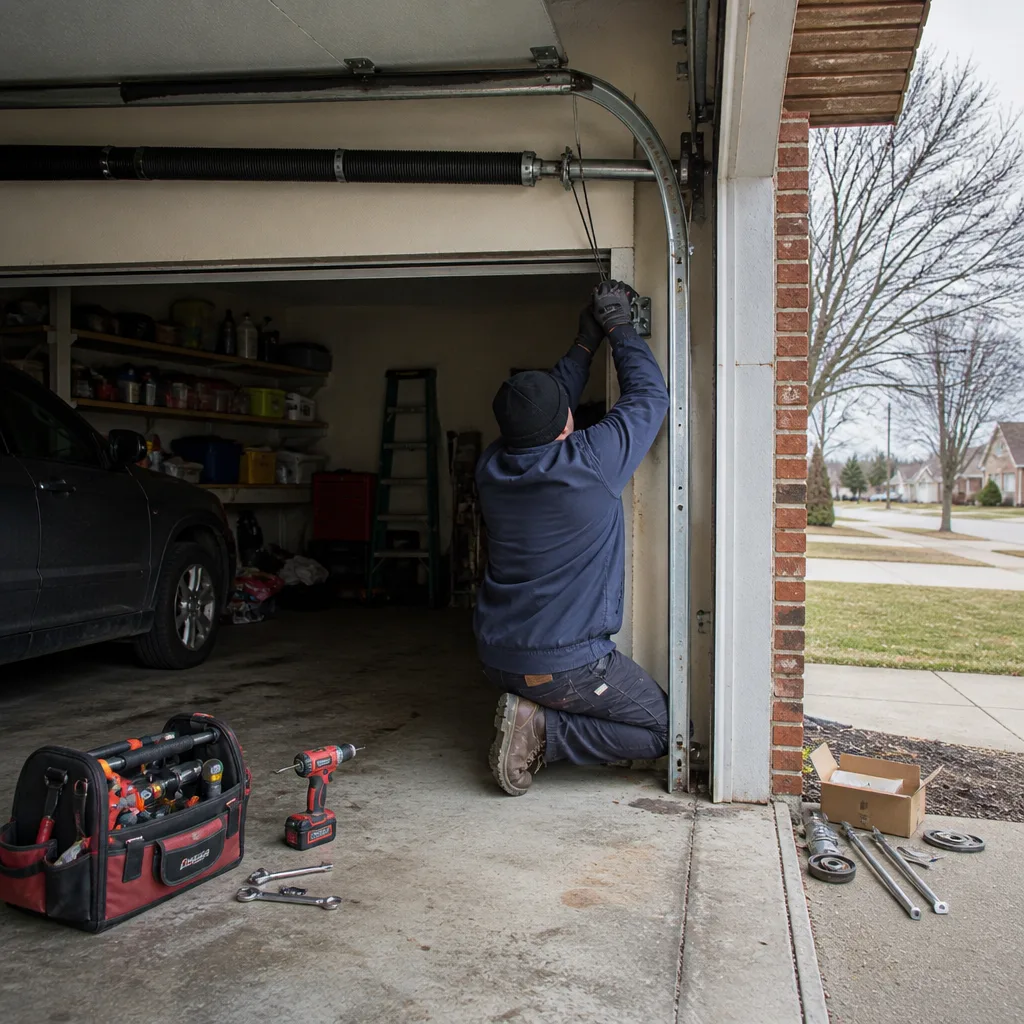
Last updated November 23, 2026
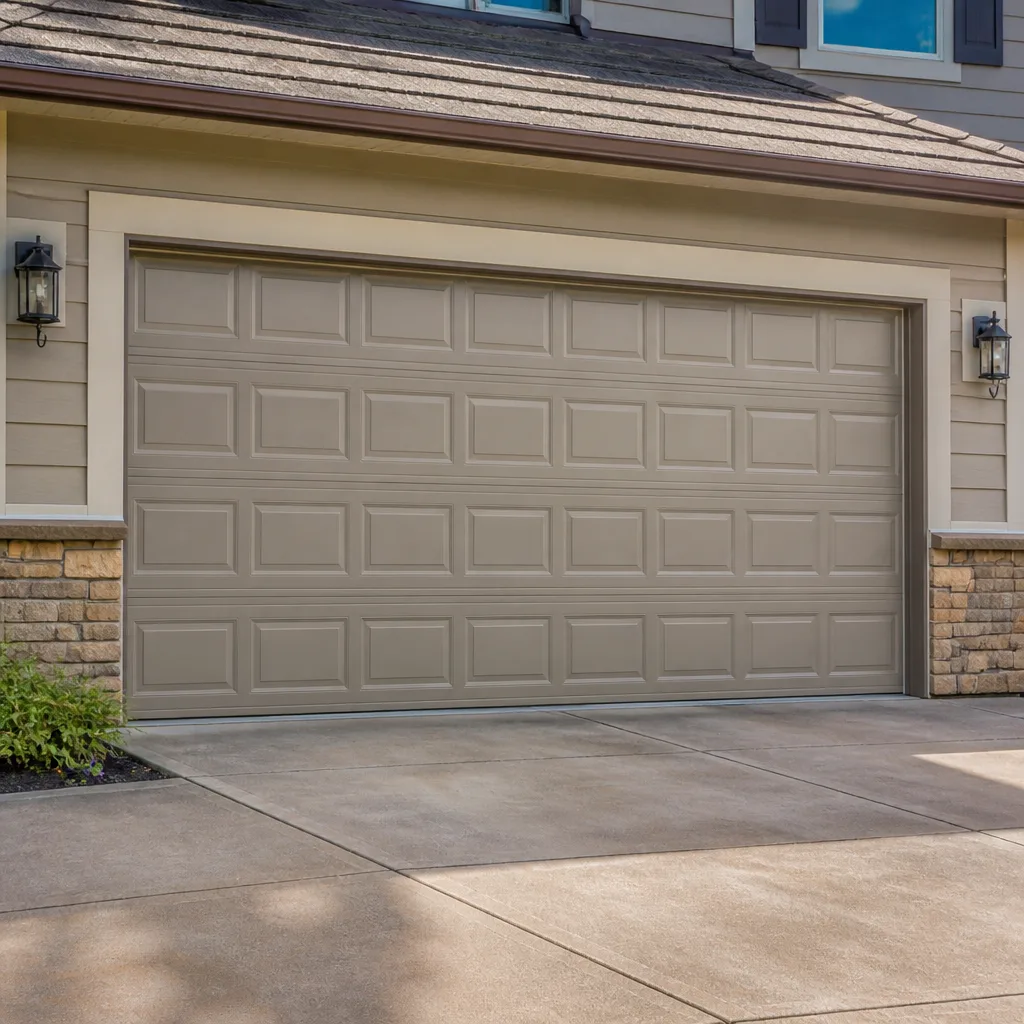 Raised-panel steel
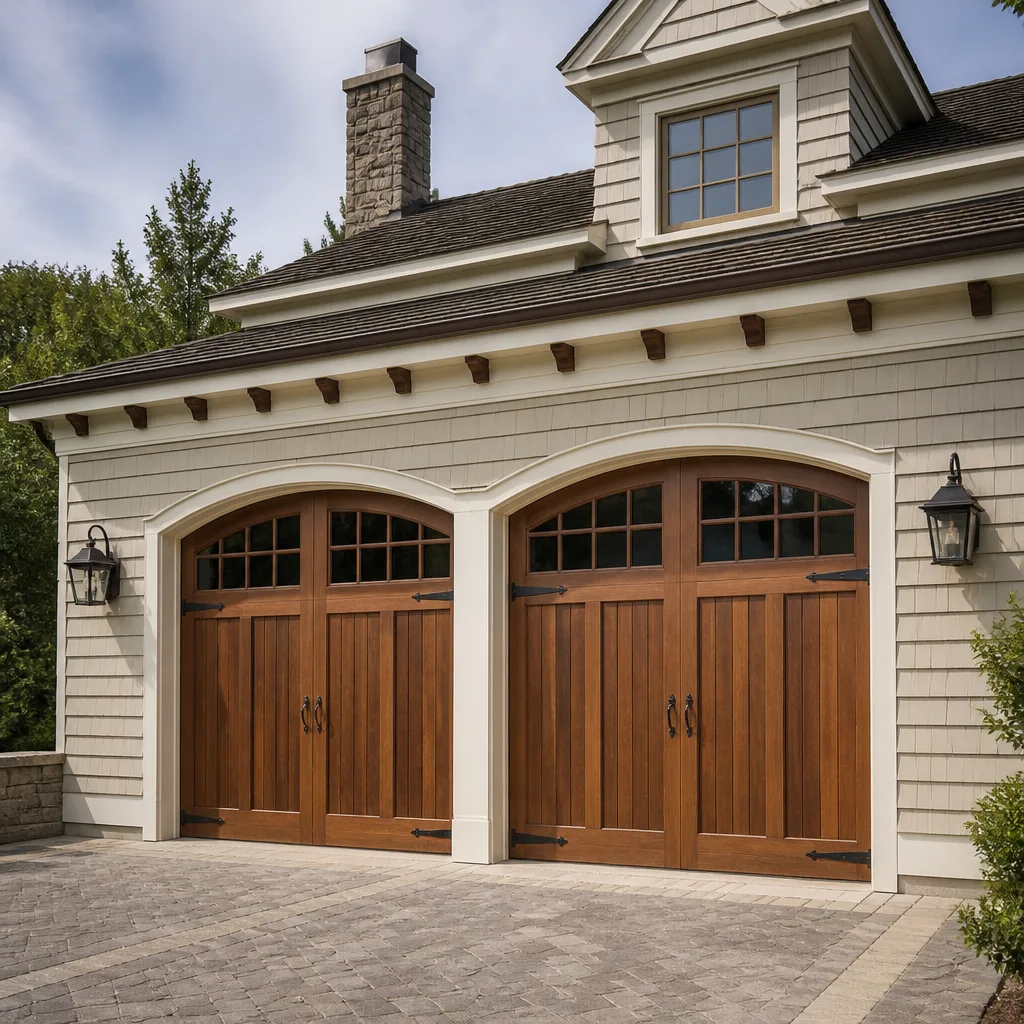 Carriage house
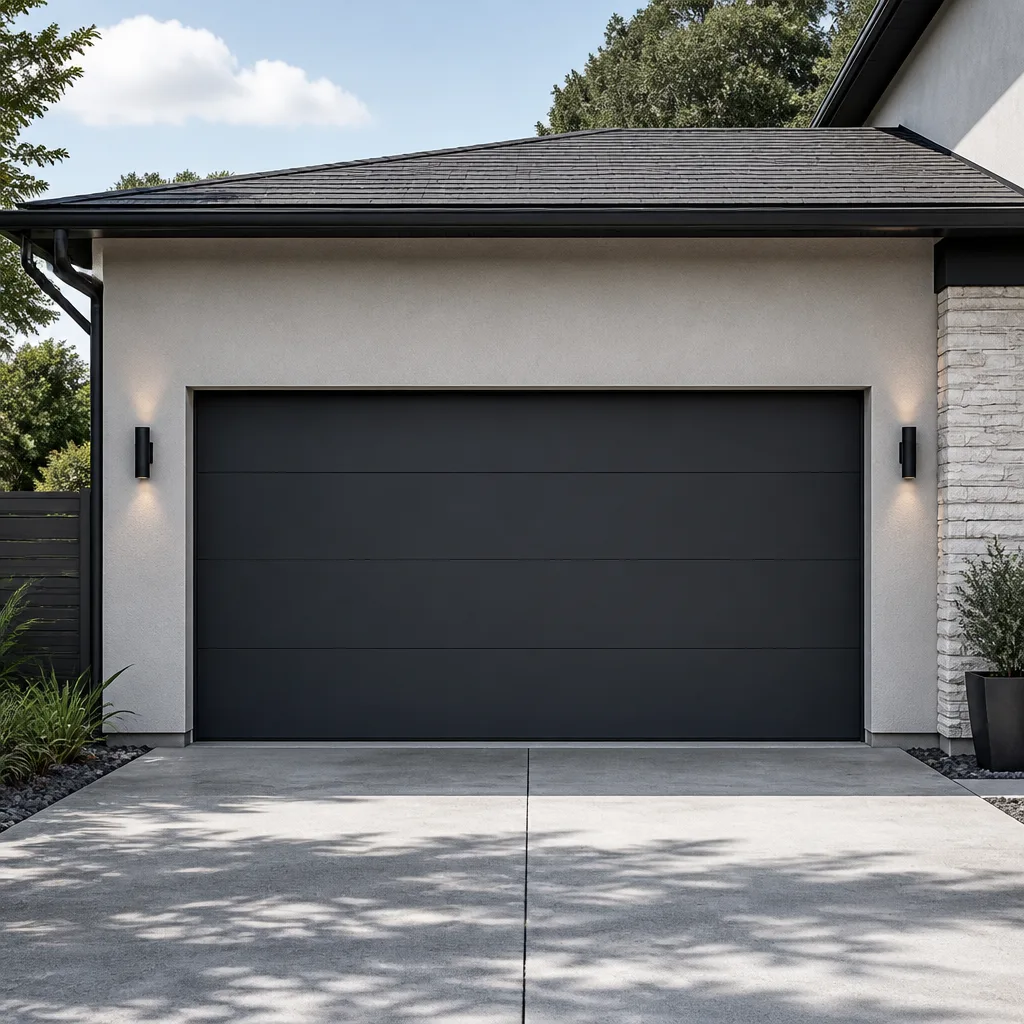 Modern flush
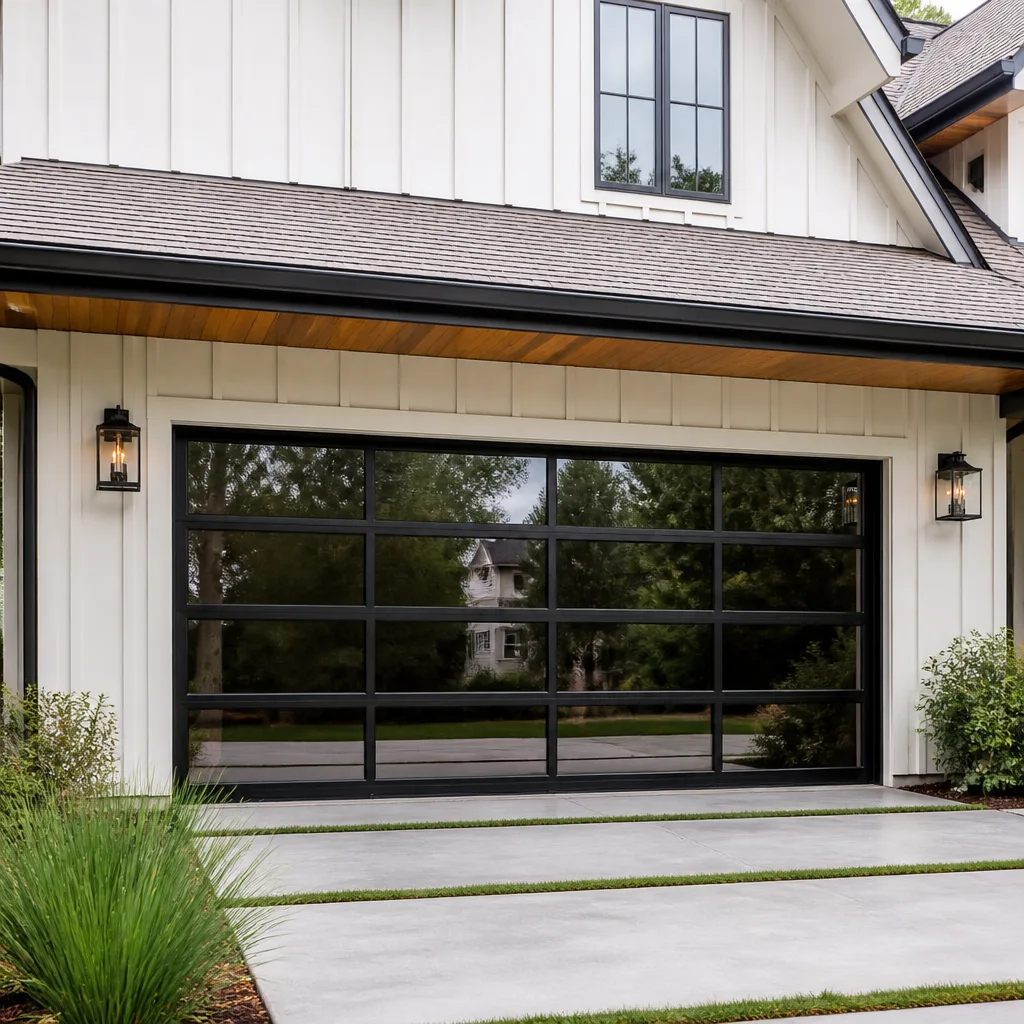 Full-view glass
 LiftMaster openers
 Chamberlain openers
Full 25-point door and opener safety check with every visit - springs, cables, rollers, tracks, and your LiftMaster or Chamberlain opener included
You get a price before we start. It does not change when the pro arrives.
Get your free estimateDIY vs Professional Garage Door: The Aurora Homeowner’s Decision Guide
Most garage door advice online treats the DIY-versus-professional question as a matter of nerve or budget. That’s the wrong frame. A torsion spring stores enough energy to break a wrist or put someone through drywall, and that single fact reshapes the whole decision. This guide isn’t a lecture about self-reliance. It’s a task-by-task risk assessment for Aurora homeowners: what you can safely handle with a screwdriver, what needs a trained technician and the right winding bars, and how a small DIY misstep on an Aurora door tends to grow into a bigger repair once the temperature drops below freezing. By the end you’ll have a clear framework, not a slogan.
Quick Answer
For Aurora homeowners, the split is straightforward: cosmetic and adjustment tasks like lubricating rollers, tightening brackets, and replacing a remote battery are genuinely safe to do yourself. Anything involving torsion springs, cables, bottom brackets, or the opener’s internal gearing is not, because the stored energy and tension can injure you badly even if you’re careful. If your door won’t open, won’t close, or makes a sharp bang, that’s a professional call, and a free estimate settles the question fast.
Styles & brands we work with
- Raised-panel steel
- Carriage house
- Modern flush
- Full-view glass
- LiftMaster openers
- Chamberlain openers
Table of Contents
- The Real Decision Framework: Risk, Not Pride
- Task-by-Task: What’s Safe vs. What Requires a Technician
- The Spring Tools You’d Need (and Why Lacking Them Is the Danger)
- Why DIY Mistakes Compound in an Aurora Winter
- What Aurora Homeowners’ Insurance Typically Says About DIY Door Work
- Cost-Benefit Reality: When DIY Saves and When It Costs More
- Opener Diagnostics: The One Electronic Task Worth Understanding
- Full Replacement: Why This Is Almost Never a DIY Job
The Real Decision Framework: Risk, Not Pride
The useful question isn’t “am I handy enough?” It’s “what’s the failure mode if I get this wrong?” Every garage door task falls into one of three risk tiers, and sorting your job into the right tier takes about thirty seconds.
Tier 1 – Low risk. Cosmetic upkeep, light cleaning, sensor alignment, battery swaps, and lubrication. If you get it wrong, the door still works and nothing is under tension. This is where DIY genuinely makes sense.
Tier 2 – Moderate risk. Track adjustment, roller replacement, and bracket tightening on a door that is fully closed and de-tensioned. These require patience and the right tools but won’t store energy that can hurt you if the door is properly at rest.
Tier 3 – High risk. Torsion springs, extension springs, cables, bottom brackets, and any work that requires releasing or re-tensioning the system. These components hold the full weight and stored force of the door. A professional carries specific liability coverage and the training to work with that energy safely. A general handyman often doesn’t, which is a detail worth asking about before anyone touches a spring.
Sorting your job by tier is the whole framework. It removes the emotional weight from the decision and replaces it with a simple yes or no based on what’s actually under load. When in doubt about the tier, treat it as Tier 3 until a professional tells you otherwise.
Task-by-Task: What’s Safe vs. What Requires a Technician
Here’s the practical division. Print it, screenshot it, or keep it in mind the next time something on the door starts acting up in Aurora.
Safe for most homeowners
- Lubricating hinges, rollers, and tracks with a garage-door-rated lubricant, not WD-40 or motor oil.
- Aligning photo-eye sensors when the door reverses for no obvious reason. The brackets are usually adjustable by hand or with a wrench.
- Replacing remote batteries and re-pairing a remote to a LiftMaster or Chamberlain opener using the manual’s programming steps.
- Wiping down panels and clearing debris or leaves from the track channels.
- Tightening loose hinge screws on a closed, de-tensioned door.
- Testing the safety reverse by placing a small object in the door’s path and confirming it reverses.
Requires a trained technician
- Torsion spring replacement – the highest-risk component, and the reason certified spring work exists as a specialty.
- Extension spring replacement – still under heavy tension and can whip if released incorrectly.
- Cable replacement or re-spooling – cables carry the full weight of the door and can snap under load.
- Bottom bracket work – these brackets are under tension even when the door looks at rest.
- Opener gear, logic board, or capacitor replacement – not dangerous to the body, but easy to misdiagnose and expensive to get wrong.
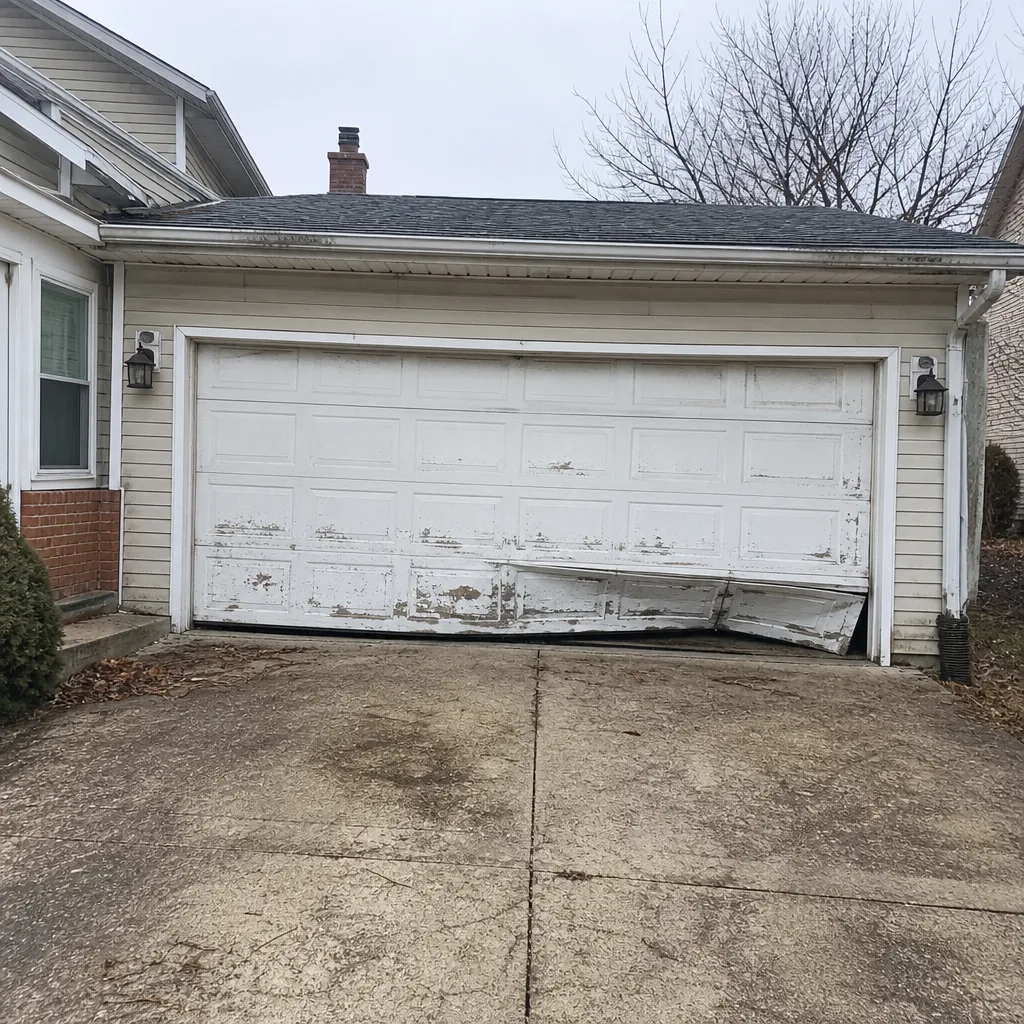
- Replacing a bent or cracked panel – alignment and spring tension have to match the new panel’s weight.
Notice the pattern. Everything low on the door and out of the spring system is fair game. Everything holding the door’s weight is not. That line isn’t arbitrary; it’s a physical one based on what happens if a component lets go.
The Spring Tools You’d Need (and Why Lacking Them Is the Danger)
This is where the “I can YouTube it” logic falls apart. Spring work requires specific tools, and without them the job is dangerous regardless of how careful you are.
- Properly sized winding bars. Torsion springs need solid steel bars matched to the spring cone diameter. The wrong size slips out under tension, and the spring spins free.
- A torsion spring chart or caliper to match wire gauge, inside diameter, and length. A mismatched spring changes how the door balances and wears out the opener early.
- C-clamps to hold the door in place while the spring is off, so it doesn’t drop.
- Heavy-duty gloves and eye protection rated for impact, not just dust.
- A second person for extension spring work and any panel removal.
Our technicians have up to 9 years of experience and carry the specific tools for the specific brands in a customer’s home – LiftMaster, Chamberlain, and Clopay among them – because each manufacturer’s spring tolerances differ. Serving 8 of the most widely installed brands means the parts are brand-matched, not substituted. If you don’t already own winding bars, a caliper, and C-clamps, that’s the point where the DIY calculation tips clearly toward scheduling a specialist. Spring work is available through our garage door spring repair service, and the price is quoted and agreed before any work starts.
Why DIY Mistakes Compound in an Aurora Winter
A small misalignment in July becomes a dead opener in January. That’s the reality of an Aurora winter, where the mercury drops to single digits and the door’s moving parts contract. A limit switch that was slightly off in mild weather can reach the “open” position while the door is still an inch from the top, and at 5°F the opener’s plastic gears get brittle and the motor works twice as hard to run the same cycle.
The compounding effects are consistent:
- A misadjusted travel limit forces the opener to over-torque on every cycle, shortening gear life and sometimes stripping the gear set before winter ends.
- A track knocked slightly out of plumb binds more as the metal contracts, and the door drags enough to trip the safety reverse.
- A spring left slightly under-tensioned after a DIY swap makes the opener carry weight it was never meant to carry, and the failure shows up first on the coldest morning.
- A roller binding in a cold track puts lateral stress on the panel and hinge, which show stress cracks that weren’t there in the fall.
The fix for most of these is a professional adjustment, not a replacement – but only if it’s caught before the gear fails or the door hangs open during a cold snap. In Aurora, a door that won’t close in January isn’t just an inconvenience; it’s an open door on a house that needs to stay secure. That’s why Aurora Garage Door Repair Pros treats emergency service as a core offering, not an upsell. When the door won’t move, we do.
What Aurora Homeowners’ Insurance Typically Say About DIY Door Work
This is the practical question most guides skip: if a DIY install goes wrong and someone gets hurt, does the homeowner’s policy respond? It depends, and the answer lives in the liability portion of your policy and the specific facts of the incident, not in a single rule. But most homeowners’ policies treat the home as the insured property and the homeowner as the responsible party for work done on it.
A few patterns are common enough to ask your agent about directly:
- Injury liability may be limited if the injury results from unpermitted or non-code-compliant work. A spring that lets go because it was improperly tensioned is a very different claim from a spring that fails from age.
- Damage to the door itself from a DIY mistake is usually not covered, because it’s considered maintenance error rather than a sudden accident.
- Third-party liability – if a visitor is hurt by a door that was DIY-installed and adjusted – is the case most likely to trigger a coverage dispute.
- Evidence of professional work, including written estimates and receipts, simplifies claims and demonstrates reasonable care.
The larger point isn’t that insurance won’t cover you. It’s that the coverage question is decided after the fact, and the professional’s liability coverage is settled before the work begins. That’s the difference worth paying for on any spring or opener job. If you want to understand your own policy’s specific language, ask your agent; if you want to understand the door’s fault, call us at (866) 947-9649 for a free estimate.
Cost-Benefit Reality: When DIY Saves and When It Costs More
DIY saves money on the jobs that don’t fail. It costs more on the jobs that do, and the split is predictable from the risk tier.
Where DIY wins: Lubricant costs a few dollars, remote batteries less, and sensor alignment is free. These are the tasks where the worst outcome is having to try again. Over time, routine upkeep like this genuinely extends the life of rollers, hinges, and the opener’s gear.
Where DIY loses: A miscounted spring replacement can bend the track or bow a panel, and those are second repairs on top of the first attempt. A misdiagnosed opener “repair” can replace a part that was never the problem. A DIY panel install that doesn’t match the spring tension leaves the door unbalanced and wears the opener out early. Each of those turns a single-task job into a multi-task bill.
The decision rule: if you can name the failed part with confidence and it’s not under spring tension, DIY probably saves. If you’re guessing at the diagnosis or touching anything that stores energy, professional service is usually cheaper once you account for the risk of a second repair. Either way, the price is quoted and agreed before any work starts – no surprise on the invoice.
Opener Diagnostics: The One Electronic Task Worth Understanding
Opener diagnosis is not dangerous to the body, but it’s the task most often misjudged, and a wrong guess replaces a part that was never the problem. Which opener you have matters more than most homeowners realize. LiftMaster and Chamberlain use similar wall-console logic and photo-eye architecture; Genie uses different programming sequences and (in some models) different limits. A diagnosis that works on one brand won’t transfer cleanly to another.
Common symptoms and their likely causes:
- Door reverses immediately after closing – usually a sensor or limit issue, rarely the logic board.
- Opener hums but the door doesn’t move – often a stripped gear in the opener, sometimes a broken spring carrying the door’s weight.
- Remote works only up close – usually a battery or antenna issue, occasionally an obstruction in the housing.
- Door doesn’t respond to remote or wall console – could be a logic board, a wall console fault, or a broken wire, and the three are diagnosed the same way but repaired differently.
The safest and fastest route past that uncertainty is a professional diagnostic. Our garage door opener repair team works the specific brand tolerances in the home, whether the opener is a LiftMaster, Chamberlain, or Genie, so the diagnosis matches the actual hardware. The written estimate follows the diagnosis, so you know the cost before anything is removed.
Full Replacement: Why This Is Almost Never a DIY Job
A new door is a balancing act between door weight, spring tension, track alignment, and opener capacity. Get any one wrong and the others misbehave. That’s why full installation is rarely a DIY decision even for experienced remodelers.
- Measure the opening, not the old door. Panels and spring sizes depend on the exact opening condition, not the door you’re replacing.
- Match spring tension to the new panel’s weight. A Clopay panel weighs differently from a generic steel door, and the spring chart has to match the new door.
- Align the track to the new door. A track that fit the old door rarely fits the new one without adjustment.
- Test the opener’s capacity and travel limits. The opener and door have to be a matched system, not an inherited one.
- Verify the safety reverse and balance. A door that’s balanced should lift by hand with minimal effort; if it doesn’t, it’s not ready.
This is also the one job where “same-day” isn’t the promise – it’s a measure, order, and scheduled install, and the written price is settled before it’s booked. Our garage door repair team handles full replacement and the repair work between replacements as one lifecycle, so a door that needs a panel today and a full door next year doesn’t get handed off to someone else in the middle.
Common Mistakes to Avoid
- Treating a spring swap as a “weekend project.” It’s the highest-risk component on the door and the one where a mistake can cause serious injury, not just a repair bill.
- Buying a spring off wire gauge alone. Inside diameter and length matter as much, and a mismatched spring changes the door’s balance and shortens the opener’s life.
- Using WD-40 on rollers and tracks. It attracts dust and dries into a gummy film that binds the rollers in cold Aurora weather. Use a garage-door-rated lubricant.
- Releasing tension without a C-clamp. The door drops when the spring comes off if it isn’t clamped, and the panels and opener take the load.
- Ignoring a small misalignment until January. A limit switch or track issue that seems cosmetic in mild weather turns into a dead opener at 5°F.
- Assuming the insurer will cover a DIY injury claim. Coverage depends on the policy language and the circumstances; check with your agent before, not after.
- Replacing the opener when the door is the problem. A humming opener can mean a stripped gear, or it can mean the door’s weight is riding on the opener because a spring failed.
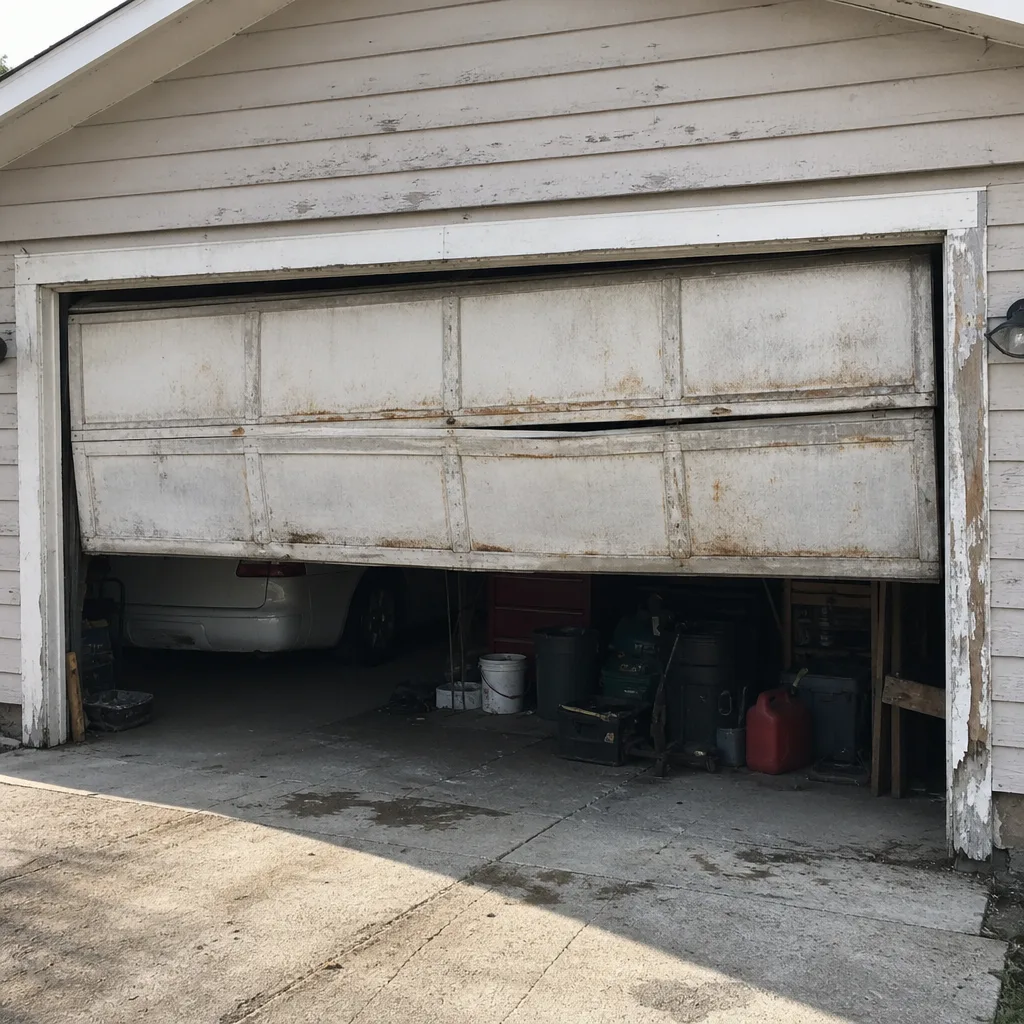
See the difference
 Before
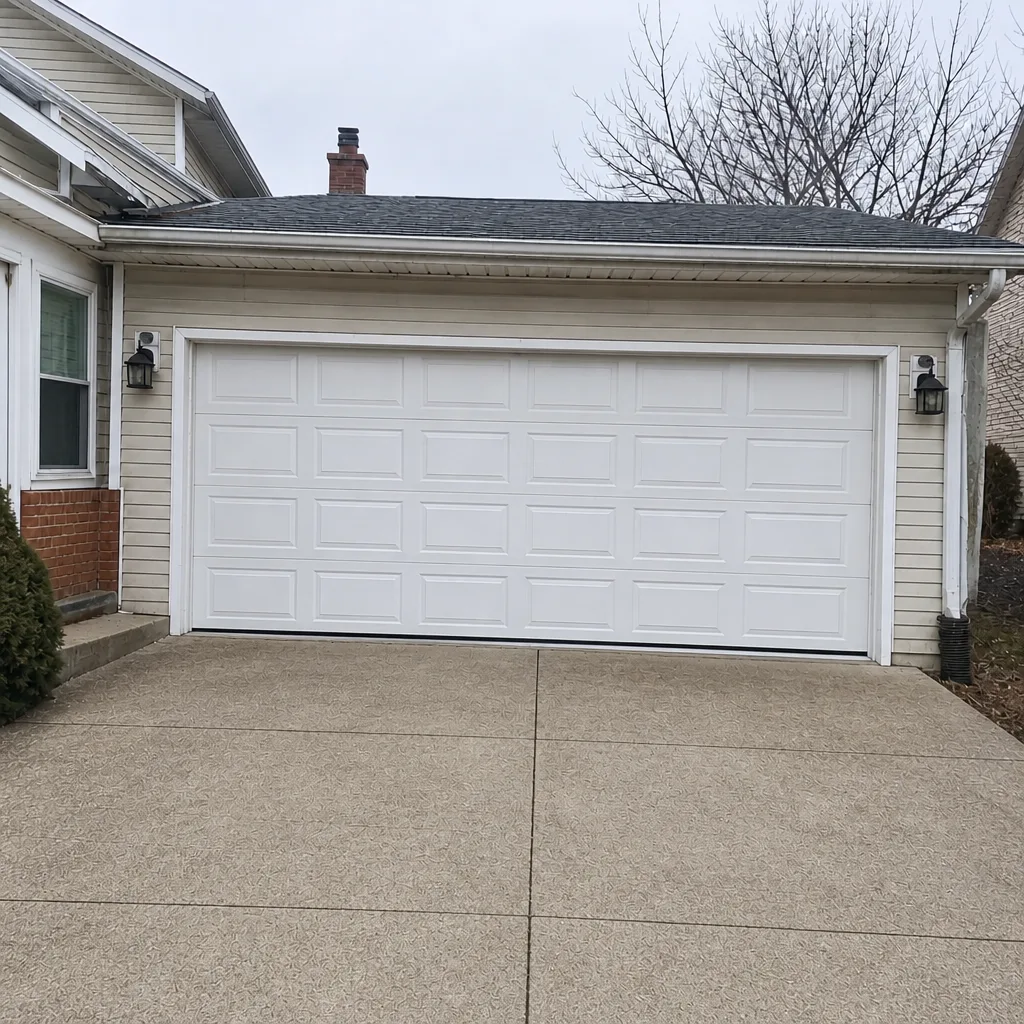 After
 Before
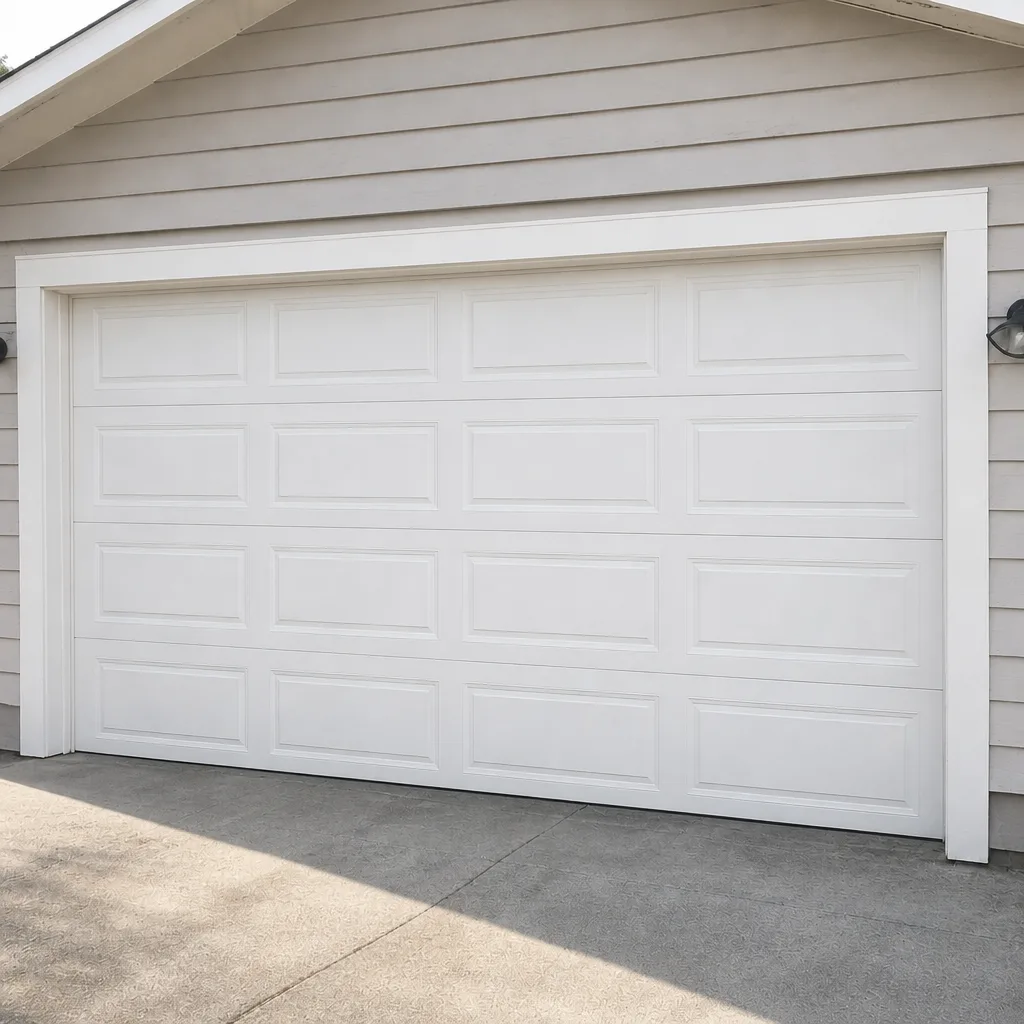 After
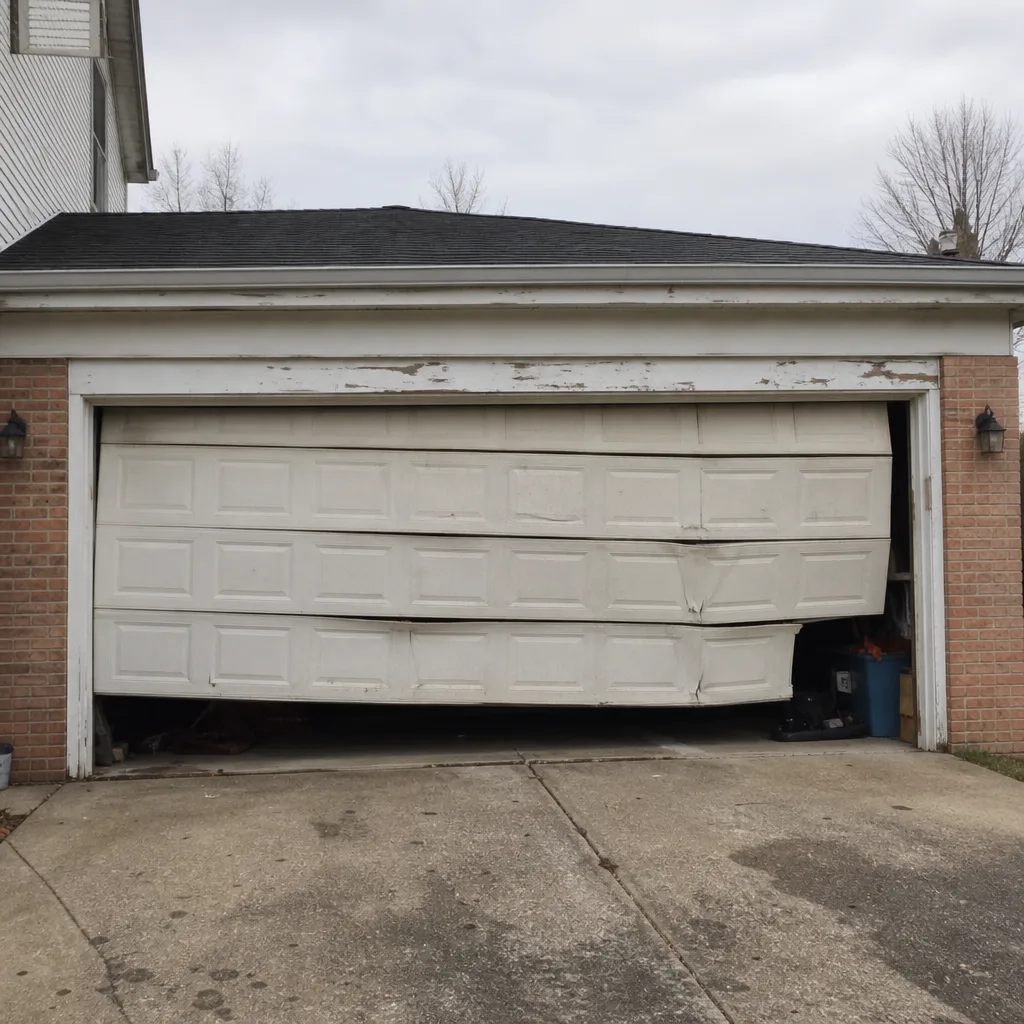 Before
 After
When to Call a Professional
Call a professional in these specific situations: a torsion or extension spring snaps; the door won’t open or close at all; the door hangs open or closed and can’t be moved by hand; cables are loose, frayed, or off the drum; the door reverses on its own; a panel is bent or cracked; the opener hums without moving the door; or you’ve already made a DIY attempt and the door is now binding or unbalanced. Any of these means stored energy, security, or an inherited misalignment is involved, and the risks of further DIY attempts aren’t worth it. Aurora Garage Door Repair Pros offers free estimates in Aurora – call (866) 947-9649 and we’ll tell you clearly whether you’re looking at a repair or a replacement.
Frequently Asked Questions
No, it’s not a safe DIY job. Torsion and extension springs store the full weight of the door as tension, and releasing or re-tensioning them without the correct winding bars and training can cause serious injury. A trained technician carries the specific tools and liability coverage for the job, and the price is quoted before any work starts. Call (866) 947-9649 for a free estimate.
You can safely lubricate rollers and tracks, align the photo-eye sensors, swap remote batteries and re-pair remotes, tighten visible hinge screws on a closed door, and clear debris from the tracks. Anything involving springs, cables, bottom brackets, or the opener’s gearing should be left to a technician. When in doubt, treat the job as high-risk.
Cold weather is when small misalignments and worn parts reveal themselves. Metal contracts, lubricant thickens, and the opener’s plastic gears get brittle, so a limit switch that was slightly off in summer forces over-torque and can strip the gear. A professional adjustment before the freeze prevents most of these failures.
Sometimes yes, if the adjustment is on a sensor, roller, or hinge on a closed, de-tensioned door. But adjustments that involve track alignment, spring tension, or opener travel limits are best done by a technician, because a small error there compounds into a larger repair. A free estimate tells you which side of that line your job is on.
It depends on your policy’s liability language and the specific circumstances of the injury, so there’s no single answer. Most policies limit coverage for injuries resulting from work that wasn’t done to code, and damage to the door itself from a DIY mistake is usually not covered. Ask your agent about your policy before starting any high-risk task.
A free estimate gives you the exact number for your door, and the price is quoted and agreed before any work starts. On routine upkeep, DIY saves money. On springs, cables, or a misdiagnosed opener, a professional repair is usually cheaper once you account for the risk of a second repair or a safety injury. Call (866) 947-9649 for a free estimate.
The Bottom Line
The DIY-versus-professional question is a technical risk assessment, and for Aurora homeowners the line is clear. Lubrication, sensor alignment, remote batteries, and hinge tightening are fair game. Springs, cables, bottom brackets, and anything under tension are not – the tools and the training exist precisely because the energy involved can hurt you. A misstep on any of the latter tends to compound in an Aurora winter, turning a small DIY adjustment into a dead opener on a 5°F morning. When the job crosses that line, a professional repair is usually the cheaper path, and it’s always the safer one. Your specific brand, our specialty – springs, openers, panels, full installs, one call covers it all.
Contact Aurora Garage Door Repair Pros
If you’ve read this far and you’re still not sure which tier your job falls into, that’s exactly the point of a free estimate. Call Aurora Garage Door Repair Pros at (866) 947-9649 and we’ll diagnose the door, tell you honestly whether it’s a repair or a replacement, and quote the price before any work starts. We handle garage door repair, opener work, spring replacement, and full installation across Aurora, and we only do garage doors – which means we do them right.
Written by the team at Aurora Garage Door Repair Pros.